Table of Contents
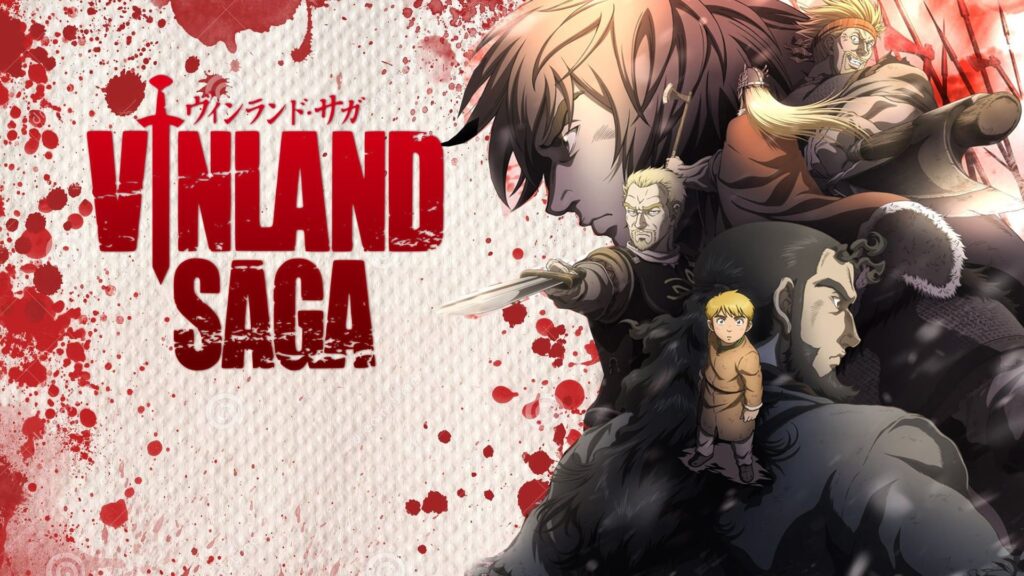
Vinland Saga Season 1 has rapidly ascended to become a cornerstone of modern historical anime, earning its place as one of the most respected and critically praised series of the last decade. While the medium of anime often leans into the “shonen” tropes of flashy battles and supernatural power systems, Vinland Saga takes a radically different path. It is a gritty, uncompromising, and deeply philosophical Seinen epic that uses the Viking Age as a backdrop to explore the darkest corners of the human soul. This review will delve into why the first season is not just an action story, but a profound meditation on revenge, violence, and the elusive nature of peace.
A Narrative of Vengeance and Beyond
At the surface level, Vinland Saga Season 1 presents itself as a classic revenge narrative. We follow Thorfinn, a young boy whose innocence is shattered when he witnesses the cold-blooded murder of his father, Thors, the “Troll of Jom.” Thors was a man who had discovered that a “true warrior” needs no sword, a philosophy that Thorfinn is too young and too blinded by grief to understand. For the next decade, Thorfinn becomes a hollow shell of a human being, fueled entirely by the desire to kill the man responsible: the charismatic and cunning mercenary leader, Askeladd.
However, the brilliance of the story lies in how it subverts this simple premise. Revenge is not portrayed as a heroic journey; it is shown as a parasitic force that consumes Thorfinn’s childhood, his happiness, and his humanity. As the season progresses, the narrative expands from a personal vendetta into a massive geopolitical drama involving the Viking invasion of England and the struggle for the Danish throne. This transition is handled with remarkable patience, allowing the viewer to become fully immersed in the world’s harsh realities before the stakes are raised to a national level.
The Masterclass of Character Writing
The greatest strength of Vinland Saga lies in its characters, particularly the complex relationship between Thorfinn and Askeladd.
- Thorfinn: He is a unique protagonist because, for much of the first season, he is intentionally difficult to like. He is angry, antisocial, and driven by a singular, destructive goal. Yet, his tragedy is deeply felt. We watch a boy who should have been a fisherman or a farmer turn into a cold-blooded assassin, all to satisfy a sense of honor that only leads to more emptiness.
- Askeladd: He is arguably one of the greatest “antagonists” in anime history. Askeladd is not a simple villain; he is a brilliant tactician, a weary leader, and a man with a hidden past and a secret dream. His manipulation of Thorfinn is both cruel and strangely paternal, creating a dynamic that is uncomfortable yet utterly fascinating. By the end of the season, the focus shifts so heavily toward Askeladd that he effectively becomes the central figure of the drama.
- Canute: The transformation of Prince Canute from a terrified, silent boy into a cold, calculating king is another highlight. His journey serves as a mirror to Thorfinn’s; while Thorfinn loses himself in personal violence, Canute embraces political violence to achieve what he believes is a divine mission: creating a “paradise” on earth, even if it means defying God.
Philosophical Depth and the Cycle of Violence
Beyond the blood-soaked battlefields, Vinland Saga is a philosophical inquiry. It constantly challenges the viewer to define “strength.” Is strength found in the ability to kill, or is it found in the courage to refuse to kill?
The series explores the “Cycle of Violence” with brutal honesty. We see how one act of murder ripples outward, destroying families and radicalizing survivors. The anime suggests that as long as men seek glory in war and honor in revenge, the world will remain a “Vinland”—a distant, unreachable dream of peace. This thematic weight elevates the show far above its peers. It doesn’t just show you a Viking fight; it asks you why these men are fighting and what they have lost in the process of winning.
Production Excellence: Visuals and Atmosphere
From a technical standpoint, the first season is a triumph of production. The animation captures the stark, cold beauty of the Northern landscapes—the biting snow of Iceland, the grey waves of the North Sea, and the muddy forests of England.
The combat is visceral and heavy. Every sword swing feels like it has weight, and every wound feels consequential. Unlike many anime where characters take immense damage and keep fighting, Vinland Saga treats injuries with a sense of realism that heightens the tension. The direction uses cinematography to great effect, often lingering on the expressive faces of characters to convey emotions that dialogue cannot capture.
The soundtrack is equally essential to the experience. It balances epic, stirring orchestral pieces during large-scale invasions with quiet, haunting melodies during moments of introspection. The music never feels overbearing; instead, it acts as the emotional heartbeat of the story, emphasizing the loneliness and exhaustion of the Viking life.
Pacing and Audience Engagement
It is important to note that Vinland Saga is a “slow burn.” It values dialogue and character development over constant action. Some episodes are dedicated entirely to political maneuvering or quiet conversations by a campfire. While this might deter viewers looking for “non-stop hype,” it is precisely this pacing that makes the eventual payoffs so rewarding. When a major character dies or a battle finally breaks out, it matters because the show has spent hours making you care about the people involved and the world they inhabit.
Final Verdict
Vinland Saga Season 1 is a rare achievement in the medium. It is a story that respects the intelligence of its audience, refusing to offer easy answers or black-and-white morality. It is a brutal, beautiful, and deeply moving exploration of what it means to be human in a world that values only power.
Through the eyes of Thorfinn, Askeladd, and Canute, we are forced to confront the futility of hatred and the immense difficulty of finding a “true path” in life. Whether you are a fan of historical fiction, psychological drama, or high-quality animation, this season is an absolute necessity. It is a modern masterpiece that will be remembered as a definitive entry in the Seinen genre.
Story: 9.5/10
Characters: 9.5/10
Animation: 9.0/10
Soundtrack: 9.0/10
Pacing: 8.5/10
⭐ Overall Rating: 9.2/10