Table of Contents
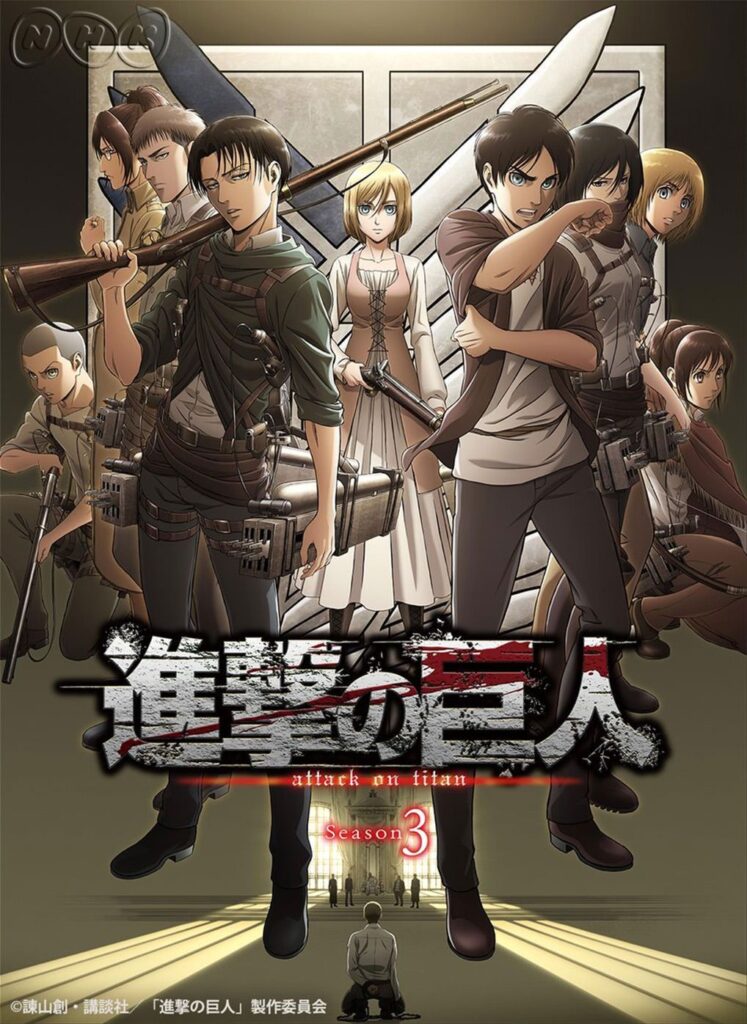
In this Attack on Titan Season 3 review, we analyze how the series successfully transitions from a survival-based horror into a sophisticated political thriller. This installment of Attack on Titan confirms that the “Return to Shiganshina” arc provides the most significant narrative payoff in the franchise, making this era of Attack on Titan a testament to the show’s incredible world-building. By focusing on the basement reveal and the moral ambiguity of its characters, our look at Attack on Titan highlights why the third installment is widely considered a masterpiece of modern storytelling. Whether examining the animation quality or the emotional weight of Erwin’s charge, every aspect of Attack on Titan points toward a story that redefined the boundaries of the Shonen genre. Ultimately, this deep dive into Attack on Titan serves as a guide to understanding the complex ideological shifts that set the stage for the series’ final conclusion. Through the lens of Attack on Titan, we see the true cost of freedom and the devastating reality of the world beyond the walls. Every episode of Attack on Titan Season 3 reinforces the high stakes and technical brilliance that fans have come to expect from the Attack on Titan brand.
The Narrative Shift: From Titans to Humans
The most striking feature of Season 3 is its early decision to bench the Titans. For the first half of the season, the primary antagonists are not the mindless man-eating giants, but rather other human beings. This creative choice is bold and serves to ground the story in a more terrifying reality.
The Corruption of Power
The narrative plunges the Scout Regiment into a web of conspiracies, assassinations, and coups d’état. We see the Scout Regiment, once the “hope of humanity,” branded as criminals by the very government they swore to protect. This shift explores the fragility of societal structures and how those in power use fear and misinformation to maintain the status quo. The “Internal Military Police” and the mysterious “First Interior Squad” represent a human threat that is, in many ways, more insidious than the Titans because their cruelty is calculated and ideological.
The Burden of Truth
At its heart, Season 3 is an investigation into history. The season masterfully builds tension around the “Truth of the World.” Every discovery feels like a hard-won victory. The narrative structure becomes layered; we aren’t just moving forward in time, we are digging deep into the past. By the time we reach the legendary basement in Shiganshina, the payoff is not just a plot point—it is a cataclysmic shift in the story’s DNA.
Character Deconstruction and Growth
One of the defining strengths of this season is the exceptional level of character development. No character remains static; the fires of conflict forge them into new versions of themselves.
Eren Yeager: From Rage to Reflection
In previous seasons, Eren was often criticized for being a “shouting protagonist” driven solely by vengeance. In Season 3, we witness a profound transformation. Faced with the burden of his father’s sins and the realization that he is not “special” by birth, Eren experiences a psychological breakdown that leads to a more mature, introspective outlook. His struggle with his own worth and his realization that freedom has a devastating price makes him a far more compelling lead.
Levi Ackerman: The Humanity of a Soldier
This season belongs, in many ways, to Captain Levi. The introduction of Kenny the Ripper provides a window into Levi’s past, explaining the origin of his stoicism and his survival instincts. We see Levi not just as a killing machine, but as a leader who bears the heavy emotional weight of every soldier he loses. His final choice at the end of the season is perhaps the most emotionally resonant moment in the entire series, showcasing a level of selflessness that transcends duty.
Historia Reiss: Finding a Voice
The transformation of “Christa Lenz” into Historia Reiss is a highlight of the political arc. Her journey from a girl seeking approval through martyrdom to a woman who chooses her own path and claims her crown is one of the best-written character arcs in anime. Her rejection of her father, Rod Reiss, is a powerful statement on breaking the cycle of parental expectations and taking control of one’s destiny.
Thematic Complexity and Moral Ambiguity
Attack on Titan Season 3 refuses to provide easy answers. It thrives in the “gray areas” of morality.
- The Justification of Means: The Scout Regiment, led by Erwin Smith, often has to become “monsters” to defeat monsters. The season asks: how much of your humanity can you sacrifice before you become the very thing you are fighting?
- The Tool of Information: We see how the government suppresses technology and history to keep the population docile. This theme of intellectual oppression remains strikingly relevant to our real world.
- The Price of Curiosity: Erwin Smith’s character is the personification of this theme. His desire to know the truth—more than his desire to save humanity—makes him a deeply flawed yet deeply human hero. His final charge is a haunting tribute to the millions of “meaningless” lives lost in the pursuit of a dream.
Technical Brilliance: Animation, Direction, and Sound
Wit Studio delivered some of their finest work in this season. The Cinematography in Season 3 is top-tier, utilizing “long takes” in the ODM gear sequences that make the viewer feel the dizzying speed of the combat.
- The Levi vs. Kenny Squad Chase: This sequence in the early episodes remains a benchmark for action animation. The fluid camera movements and the integration of 3D backgrounds with 2D character movement are breathtaking.
- The Emotional Weight of Music: Hiroyuki Sawano’s score continues to be the heartbeat of the show. Tracks like “T-Kt” and “Apple Seed” elevate the drama to operatic levels. The music doesn’t just accompany the scenes; it dictates the emotional tempo, moving from thunderous percussion during battles to haunting violins during the revelations in the basement.
Action and Pacing: A Tale of Two Halves
While the pacing in the first half is deliberate and dialogue-heavy, it serves as the necessary foundation for the explosive second half.
The Return to Shiganshina is arguably the most intense arc in the history of the medium. The tactical battle between Erwin Smith and the Beast Titan is a masterclass in strategy. It isn’t just about who is stronger, but who is willing to gamble more. The high stakes ensure that every episode feels like a finale. The pacing becomes relentless, culminating in a series of choices that leave the audience emotionally exhausted but thoroughly satisfied.
Strengths and Weaknesses
Pros:
- Narrative Depth: The transition into a political thriller adds a layer of sophistication that most action series lack.
- Unforgettable Antagonists: Kenny the Ripper and the Beast Titan (Zeke) provide formidable ideological and physical challenges.
- The Basement Reveal: One of the rare instances in storytelling where a long-hyped mystery actually exceeds expectations.
- Moral Nuance: The series stops being about “Good vs. Evil” and starts being about “Perspective vs. Perspective.”
Cons:
- Information Density: The political maneuvering in the first few episodes can be confusing for casual viewers who aren’t paying close attention.
- Shift in Tone: Some viewers who purely enjoyed the “Human vs. Titan” spectacle might find the human-centric conflict of the first half a bit jarring at first.
Final Verdict: An Artistic Triumph
Overall, Attack on Titan Season 3 is the moment the series ascended to the level of a modern classic. It is a bold, uncompromising piece of storytelling that respects the viewer’s intelligence. It manages to balance the “epic” with the “intimate,” giving us massive battles alongside quiet, devastating character moments.
By the end of the season, the world of Attack on Titan has become much larger, much darker, and much more complex. The final scene at the ocean is not a happy ending; it is a haunting prologue to the final conflict. It is a masterpiece that proves anime can handle heavy themes like genocide, propaganda, and existentialism with grace and power.
Rating Breakdown
- Story & Plot: 9.8/10
- Character Development: 9.6/10
- Animation & Art Style: 9.4/10
- Music & Sound Design: 9.7/10
- Thematic Depth: 9.9/10
⭐ Final Rating: 9.7/10